Planning an attic conversion is more than just a home improvement project—it’s a strategic decision that can boost your living space, add serious value to your property, and enhance your day-to-day life. But where should you begin? In this guide, we walk you through the smart steps every homeowner should take to plan a stress-free, high-impact attic conversion that makes the most of your home.
Why Consider an Attic Conversion?
- Maximise Unused Space: Most homes have 20–30% of their floor area in the attic—often underutilised.
- Add Value: A well-executed conversion can increase property value by up to 20%.
- Improve Lifestyle: Gain a quiet home office, guest suite, or playroom without needing an extension.
If you’ve been standing at the bottom of your stairs, staring up and wondering if the attic holds untapped potential—you’re not alone.
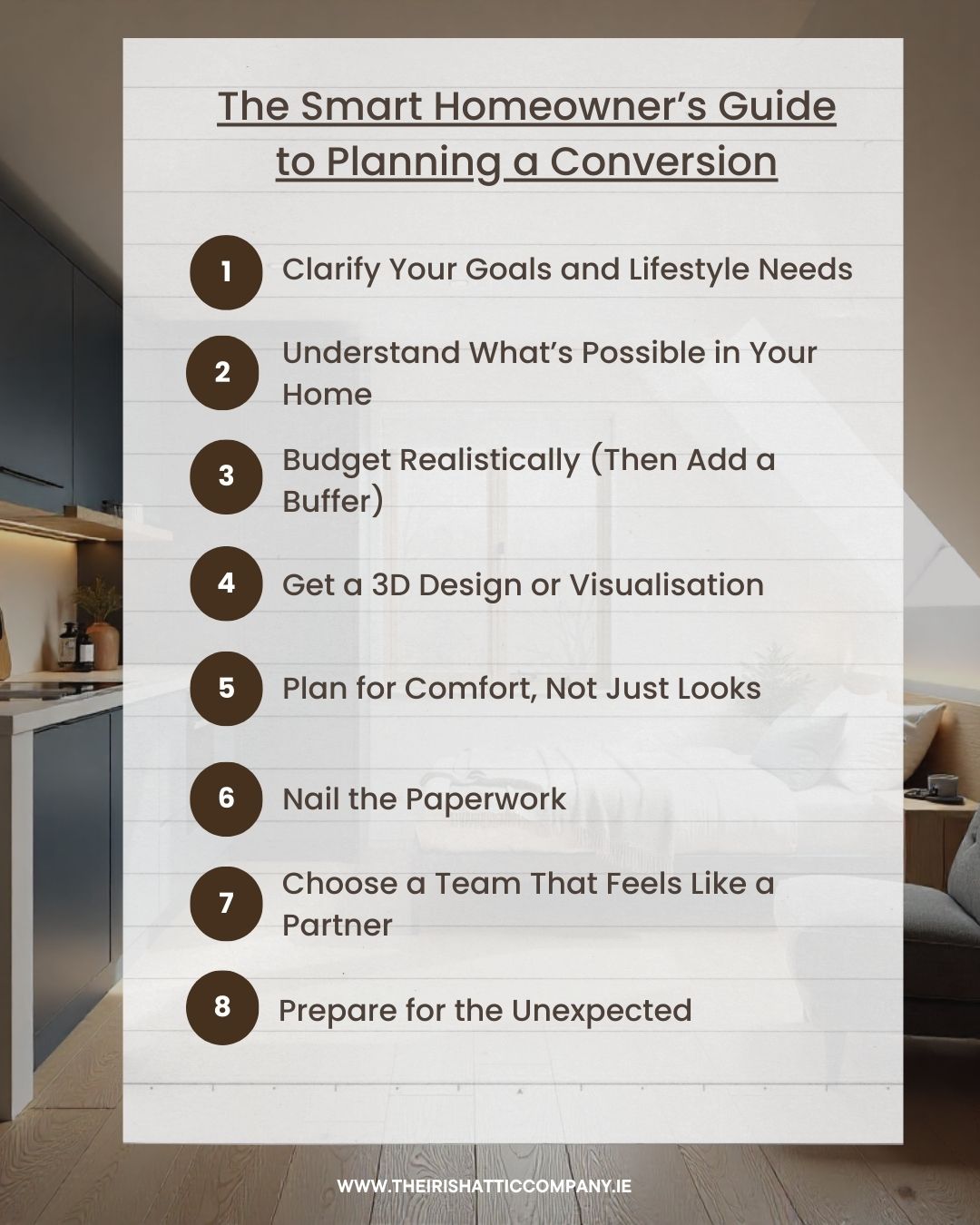
Step 1: Clarify Your Goals and Lifestyle Needs
Before reaching out to builders or sketching ideas, ask yourself:
- What’s missing in your current home layout?
- Will this be a long-term investment or a short-term lifestyle upgrade?
- Do you need more room for family, guests, or work-from-home options?
Pro Tip: Be honest about what you really want—this shapes every decision that follows.
Step 2: Understand What’s Possible in Your Home
Every attic has different possibilities. The main considerations:
- Head Height: You’ll need at least 2.2m to comply with Irish Building Regulations.
- Roof Structure: Traditional rafter roofs are usually easier to convert than modern trussed roofs.
- Access: Is there space for a full staircase, or will a space-saving staircase do?
Need help? Request a free on-site quotation to evaluate your attic’s potential.
Step 3: Budget Realistically (Then Add a Buffer)
Conversion costs vary depending on:
- Size and complexity
- Custom design elements (e.g., skylights, en-suites, storage)
- Structural work needed
Top Tip: Always factor in a 10–15% contingency to avoid stress during construction.
Step 4: Get a 3D Design or Visualisation
Seeing your space before work begins is powerful:
- Helps align your vision with your builder
- Enables confident decision-making
- Allows for faster approvals and smoother build timelines
Explore our 3D visualisation service to start visualising your future space.
Step 5: Plan for Comfort, Not Just Looks
Beyond style, your converted attic should feel just as comfortable as the rest of your home:
- Insulation & Ventilation: Proper insulation reduces energy bills and increases year-round comfort.
- Natural Light: Consider skylights or dormer windows to keep the space bright.
- Smart Storage: Built-in wardrobes and under-eaves drawers can save floor space.
Step 6: Nail the Paperwork
You may need:
- Planning Permission (especially for dormers or if altering rooflines)
- Engineer Sign-Offs for structural integrity
- Compliance with Fire & Safety Codes
Check our FAQs or Contact Us if you’re unsure about what’s needed in your area.
Step 7: Choose a Team That Feels Like a Partner
Attic conversions are intimate projects. You’re letting someone into your home for weeks. Look for a team that:
- Communicates clearly and regularly
- Listens to your concerns and ideas
- Offers a transparent process from quote to completion
Meet our team and explore how we work side-by-side with Irish homeowners.
Step 8: Prepare for the Unexpected
Even the most seamless conversions can run into surprises—hidden wiring, tricky joists, or weather delays. Stay calm, stay flexible, and trust your crew.
Bonus: Ask your builder about Open House opportunities to view a live project before committing.